Paramount Pointing
What to Check on Your Brickwork After Winter: A Practical Spring Guide for Property Owners
Winter has a habit of exposing weak spots that were easy to ignore in milder weather. A wall that looked perfectly fine in autumn can start showing open joints, damp staining or crumbling mortar by the time spring arrives. It is not always dramatic at first. Sometimes it is just a pale stain near a windowsill, a bit of loose material on the ground below a chimney, or a section of brickwork that suddenly looks tired and uneven compared with the rest of the elevation.
 That is why spring is a sensible time to give your property a proper once-over. Cold temperatures, repeated freeze-thaw cycles, driving rain and trapped moisture all put pressure on masonry. If you spot problems early, repairs are usually simpler, neater and far less disruptive than waiting until damage spreads. For homeowners, landlords and facilities teams alike, a careful post-winter inspection can help you decide whether the building simply needs cleaning, whether areas of mortar are ready for repair, or whether it is time to bring in a specialist for more involved brickwork repairs.
Why winter is so hard on brick and mortar
Brickwork is durable, but it is never invincible. When mortar joints are already ageing, winter moisture can get into the smallest openings. If temperatures then drop, that moisture expands as it freezes, gradually forcing joints wider and putting more stress on the face of the bricks themselves. Over time, you can end up with receding mortar, fine cracking, loose sections and localised brick failure.
Rainwater goods and exposed areas matter too. Parapets, chimneys, boundary walls, sills and upper elevations often take the worst of the weather. If gutters overflow or coping stones allow water to track down the face of a wall, the issue is not just cosmetic. Moisture tends to linger in the same vulnerable areas, which is why those sections often show the first signs of damage in early spring.
A simple rule: if winter has left behind staining, open joints, loose material or persistent damp patches, it is worth investigating now rather than hoping a dry week will sort it out on its own.
The main areas worth checking first
You do not need to overcomplicate the inspection. Start with the areas most exposed to weather and the places where water is most likely to sit or run. Stand back first so you can spot colour changes, patchy repairs, bulging sections or obvious staining. Then move closer and look at the mortar joints, brick faces and transitions around openings.
| Area to inspect | What you might notice | Why it matters |
|---|---|---|
| Chimneys, parapets and top courses | Open joints, loose mortar, local staining | These areas are highly exposed and often deteriorate first. |
| Around windows and doors | Hairline cracking, staining below sills, failed joints | Water often tracks into these weak points and worsens quietly. |
| Lower walls and sheltered corners | Green growth, damp marks, salts, flaky finishes | These can point to moisture retention and possible damp-related issues. |
| Boundary walls and garden brickwork | Leaning sections, washed-out joints, loose copings | Smaller structures are often ignored until movement becomes obvious. |
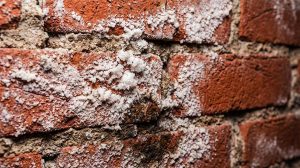
In practical terms, look out for mortar that has recessed back from the face of the brick, powder collecting on sills or paving, fresh cracks that were not there before, and individual bricks that look blown, spalled or unusually soft. If you are seeing white deposits on the surface, that can be a sign of salts moving through the wall. Paramount Pointing already covers the background to mortar erosion and the causes of white staining on brickwork, both of which are especially relevant after a wet winter.
Older buildings need a gentler approach
If the property is older, listed or built with softer traditional materials, it is worth being extra careful about how repairs are handled. Older walls often need to breathe. Using an overly hard modern repair mortar where a more flexible traditional mix is appropriate can trap moisture and push the problem elsewhere. That is one reason heritage and period properties should not be treated exactly the same way as newer brick elevations.
Where the original construction calls for it, natural lime mortar can be the better fit, and on more sensitive projects a dedicated heritage pointing service makes far more sense than a one-size-fits-all repair. Spring inspections are useful here because they give you a chance to pick up weathering before well-meaning patch repairs make a traditional wall harder to preserve properly.
Cleaning, repairs and damp proofing often need to be considered together
One of the easiest mistakes after winter is to focus on the visible symptom rather than the wider pattern. A stained wall may need more than a wash-down. A patch of moss or grime might simply be cosmetic, but it can also be highlighting where moisture sits for too long. Likewise, a damp patch indoors may have less to do with decorating and more to do with failed joints, porous masonry or water tracking through an exposed elevation.
That is why the best solution is sometimes a combination of services rather than one isolated fix. Specialist façade cleaning can help reveal the true condition of the surface and improve presentation, while targeted repairs deal with the failing brickwork underneath. Where moisture penetration is part of the story, professional damp proofing may also be needed to stop the same issue returning. Looking at the wall as a whole usually gives a better result than fixing one symptom in isolation.
When a proper survey is worth arranging
A basic visual check is useful, but some warning signs should not be left to guesswork. If mortar is falling out in multiple areas, bricks are breaking down, damp keeps returning after previous repairs, or the damage is high up and difficult to access safely, it is time to get it looked at properly. The same goes for commercial buildings, apartment blocks and older properties where access, safety and material matching all matter more.
Spring is often the right moment to plan that work. The worst weather has usually passed, defects are still visible, and there is time to schedule repairs before another cycle of wet and cold pushes the masonry further. A straightforward inspection now can help you separate harmless winter grime from the kind of deterioration that turns into larger brick replacement, more extensive repointing or recurring damp problems later in the year.
Summary
Brickwork rarely fails overnight. More often, it gives you a few early clues and winter tends to make those clues easier to spot. If your property has come out of the colder months with open joints, staining, salt marks or localised damp, acting early is usually the smarter move.
Paramount Pointing works across pointing, restoration, cleaning and associated masonry repairs, so if you want a clearer view of what your walls need after winter, you can get in touch here to arrange advice on the right next step for your property.