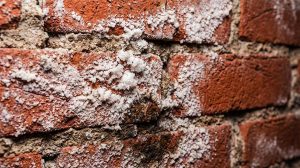
If you’ve noticed chalky white marks appearing on your brickwork, you’re not alone. These powdery deposits are a common issue on both older properties and newer builds, often showing up after periods of wet weather or during the first few years following construction. While they can look worrying, these marks are usually a condition known as efflorescence.
In this guide, we’ll explain exactly what efflorescence is, why it occurs, how to remove it safely, and when it may be a sign that your brickwork needs professional attention.
What Is Efflorescence?
Efflorescence is a white, powdery residue that forms on the surface of brickwork, stone, concrete, or mortar joints. It develops when water moves through masonry, dissolves naturally occurring salts within the materials, and then evaporates at the surface. As the water evaporates, it leaves the salts behind, creating visible white staining.
In most cases, efflorescence is a cosmetic issue rather than a structural one. However, it can indicate that moisture is moving through the masonry, which is something worth understanding and addressing.
What Does Efflorescence Look Like?
Efflorescence typically appears as:
- White or light grey powdery patches
- A chalky film on bricks or mortar joints
- Streaks or cloudy marks following rain
- Lightening of the brick colour in affected areas
In some cases, the deposits may have a slightly yellow or off white tint depending on the type of salts present.
What Causes Efflorescence?
Efflorescence requires three things to occur: soluble salts within the masonry, moisture to dissolve those salts, and a pathway for the moisture to reach the surface. The most common contributing factors include:
- Rainwater penetrating brickwork or mortar joints
- Newly built walls retaining construction moisture
- Poor drainage around foundations
- Defective or missing damp proof courses
- Condensation inside the property
- Porous or deteriorating mortar
It is particularly common in new builds, as bricks and mortar naturally contain salts and excess moisture from construction. As the building dries out over time, these salts are drawn to the surface.
Is Efflorescence Harmful?
Externally, efflorescence is usually harmless and does not weaken brickwork. In many cases, it will gradually fade on its own as rainfall washes the salts away and the masonry dries out.
However, if efflorescence appears internally or keeps returning after removal, it may point to ongoing moisture issues such as rising damp, water ingress, or failing mortar joints. In these situations, further investigation is recommended.
Efflorescence vs Other White Stains
| Issue | Appearance | Typical Cause | Action Required |
|---|---|---|---|
| Efflorescence | White, powdery, wipes off when dry | Moisture drawing salts to the surface | Cleaning and moisture control |
| Lime Bloom | Hard white residue on new mortar | Free lime reacting with air | Usually fades naturally |
| Paint or Render Residue | Patchy white staining | Previous coatings breaking down | Targeted cleaning or repair |
| Salt Contamination | Crystalline deposits that return | Ongoing damp or water ingress | Professional assessment required |
How to Remove Efflorescence Safely
Before attempting removal, it’s important to make sure the brickwork is dry. Removing efflorescence while moisture is still present can cause salts to migrate back to the surface.
Step 1: Dry Brushing
In many cases, a stiff bristled (non wire) brush is all that’s needed. Brush the surface gently when the wall is completely dry, allowing the powder to fall away.
Step 2: Rinsing with Clean Water
If brushing alone doesn’t work, lightly rinse the area with clean water. Avoid pressure washing, as this can drive moisture deeper into the masonry and make the problem worse.
Step 3: Mild Cleaning Solutions
For stubborn deposits, a mild solution such as diluted vinegar may be used. The wall should be pre wetted, the solution applied sparingly, and then thoroughly rinsed. Always test on a small, inconspicuous area first.
Harsh acids and wire brushes should be avoided, as they can damage brick faces and mortar joints.
Preventing Efflorescence in the Future
While efflorescence can’t always be prevented, the risk can be significantly reduced by controlling moisture movement. Effective measures include:
- Ensuring gutters and downpipes are clear and functioning correctly
- Repairing cracked or eroded mortar joints
- Improving drainage around the base of walls
- Allowing new brickwork adequate drying time
- Using breathable, appropriate mortars for older buildings
Repointing carried out with the correct mortar mix can play a key role in reducing water penetration, particularly on period and heritage properties.
When to Seek Professional Help
If efflorescence keeps returning, appears inside the property, or is accompanied by damp patches or deteriorating brickwork, it’s a sign that moisture is not being managed effectively.
This is where experienced specialists can help. At Paramount Pointing & Restoration, we regularly assess brickwork affected by efflorescence to determine whether the issue is purely cosmetic or linked to deeper problems such as failing mortar, trapped moisture, or historic repairs using incompatible materials.
By addressing the underlying cause rather than just the visible staining, long term damage can be avoided and the appearance of the building restored properly.
Final Thoughts
Efflorescence is a common and often harmless condition, but it should never be ignored outright. Understanding why it occurs makes it easier to remove safely and reduce the chances of it returning.
If you’re unsure whether the white staining on your property is efflorescence or a sign of a more serious moisture issue, a professional inspection can provide clarity and peace of mind.
Concerned about white staining or deteriorating mortar? Paramount Pointing & Restoration offers expert advice and specialist repair solutions tailored to traditional and modern masonry alike.