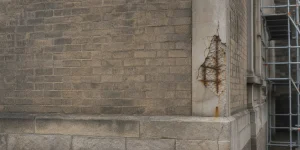
Concrete can look strong from the outside while a serious problem is developing within it. When embedded steel begins to corrode, the damage often starts quietly, then appears as cracking, staining, hollow areas or loose concrete.
Understanding how this process works helps building owners, surveyors and facilities teams make better decisions. It also explains why lasting concrete repairs often need more than filling cracks or replacing broken edges.
Why steel is placed inside concrete
Concrete is excellent in compression, which means it can carry heavy loads when it is being squeezed. Steel reinforcement adds tensile strength, helping the concrete resist bending, movement and stress. Together, they form reinforced concrete, a material used in many structural elements including beams, columns, slabs, balconies, car parks, bridges and retaining walls.
In sound concrete, embedded steel is naturally protected. The concrete around the reinforcement is highly alkaline, which helps form a passive protective layer on the steel surface. As long as that environment remains stable, the steel can stay in good condition for a very long time.
Problems begin when the concrete no longer protects the steel properly. Moisture, oxygen and contaminants can reach the reinforcement through cracks, porous concrete, defective joints or areas with insufficient cover. Once the protective environment breaks down, corrosion can start.
How corrosion starts around embedded reinforcement
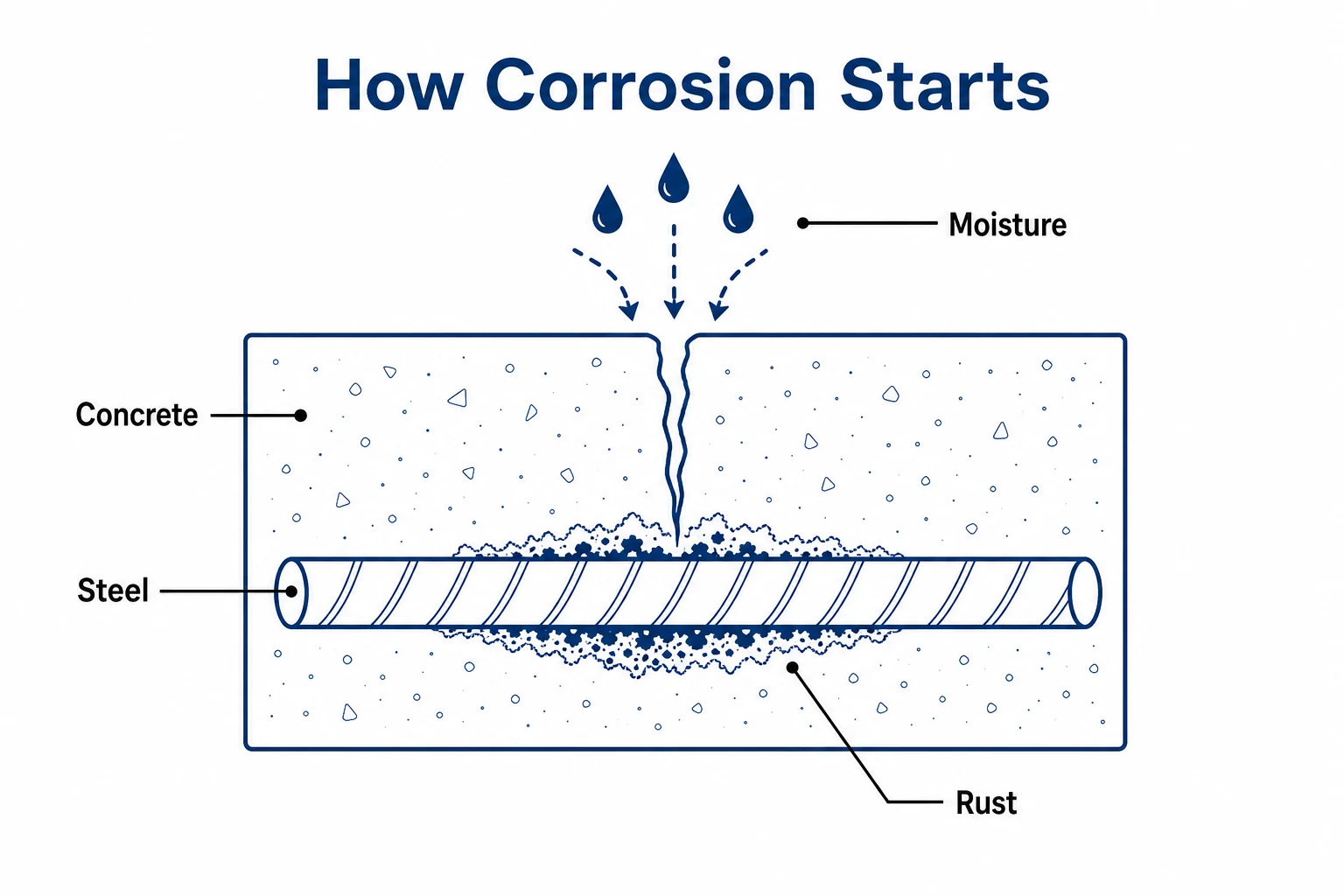
Steel corrosion in concrete is usually driven by a change in the conditions around the reinforcement. Two common triggers are carbonation and chloride contamination.
Carbonation happens when carbon dioxide from the air reacts with the concrete and gradually reduces its alkalinity. If carbonation reaches the depth of the reinforcement, the passive protective layer around the steel can be lost. Chlorides, often associated with salts and aggressive exposure conditions, can also break down that passive layer even when the surrounding concrete remains alkaline.
For corrosion to continue, moisture and oxygen are needed. This is why exposed, damp or poorly drained concrete can be vulnerable. Water ingress through cracks, failed waterproofing, leaking joints or damaged surfaces can create the conditions that allow reinforcement corrosion to progress.
Early signs may be subtle. Rust staining, fine cracks running along reinforcement lines, small areas of surface disruption or localised spalling can all point to corrosion beneath the surface. In some cases, the surface may seem largely intact while delamination has already formed inside the concrete.
Why rust cracks concrete
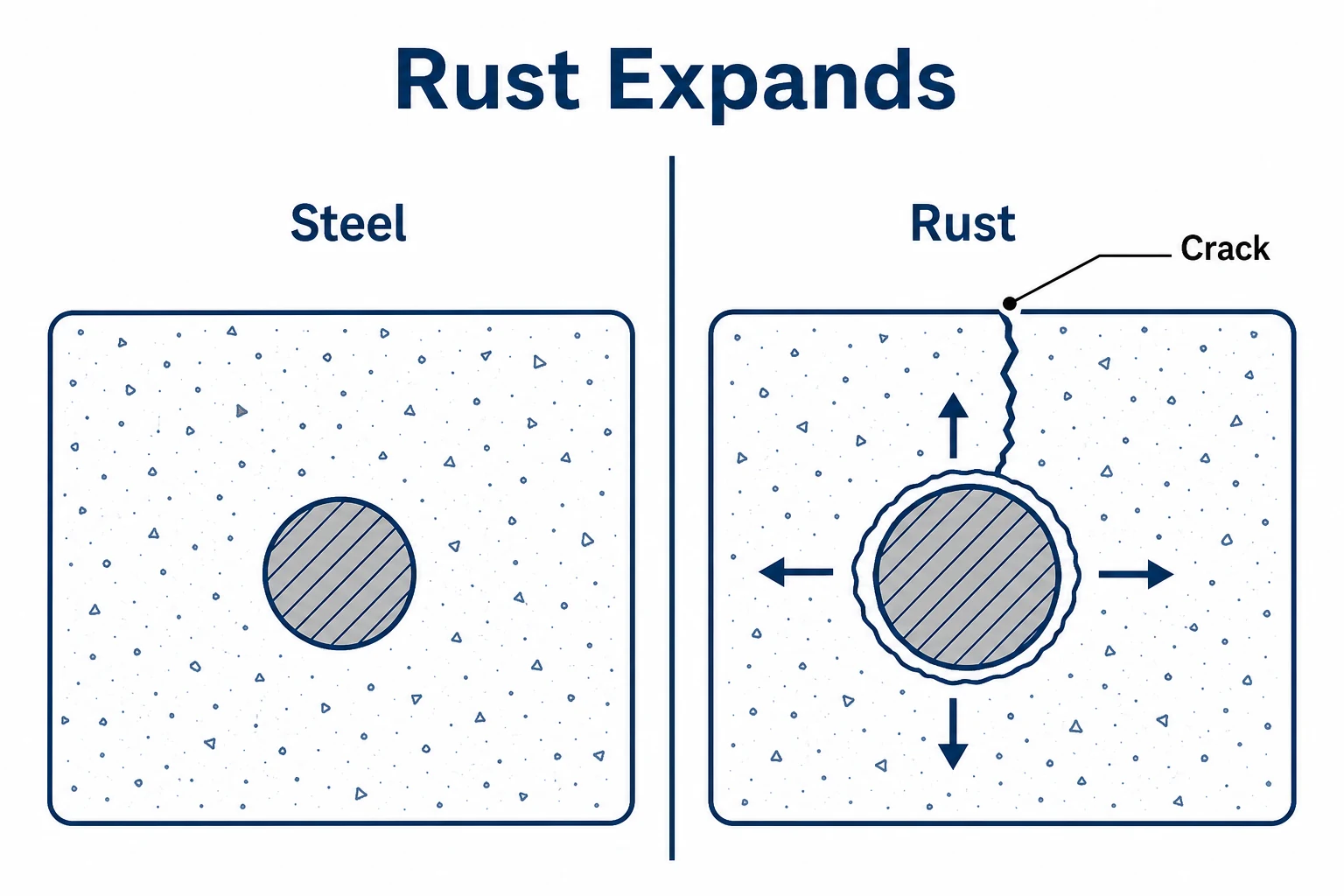
The key issue is expansion. When steel corrodes, the rust products take up more space than the original steel. That expansion creates pressure inside the surrounding concrete.
Concrete is strong, but it is not designed to contain continual expansive pressure from rusting reinforcement. As corrosion products build up, they push against the concrete cover. This can cause cracking, splitting and eventually spalling, where sections of concrete break away from the surface.
Once cracking begins, the process can accelerate. Cracks allow more water, air and contaminants to reach the steel, which feeds further corrosion. Loose or cracked concrete also reduces protection around the reinforcement, so the damage becomes progressive rather than isolated.
This is why surface repairs alone can be misleading. A cracked patch may be removed and replaced, but if the corrosion mechanism is still active nearby, new cracks can appear later. The visible defect is often a symptom. The underlying cause is the electrochemical corrosion process taking place around the embedded steel.
Where concrete defects appear alongside movement in masonry, open joints or weakened external fabric, it can be useful to consider wider structural condition too. Paramount Pointing has also covered warning signs in commercial structural brick repair issues, which can help property teams think beyond the most obvious surface damage.
What happens if corrosion is left untreated
Untreated reinforcement corrosion can lead to worsening deterioration across the affected structure. The exact impact depends on the element, exposure conditions, reinforcement layout and how far the corrosion has progressed.
Common consequences include wider cracking, loss of concrete cover, falling fragments, exposed reinforcement and reduced durability. On structural elements, the concern is not only appearance. Corrosion can reduce the cross section of steel, weaken the bond between steel and concrete, and affect the ability of the element to perform as intended.
The damage can also spread. One repaired area may sit next to steel that remains at risk, especially if the surrounding concrete still contains contaminants or has changed chemically. This can create a cycle of repeated patch repairs, with new defects forming around older repairs.
That does not mean every crack indicates severe structural danger. Some cracking is non structural or caused by other movement, shrinkage or impact. The important point is that corrosion related defects should be assessed properly. A good investigation looks at what has happened, why it has happened and how to control the cause.
Why patch repair may not be enough
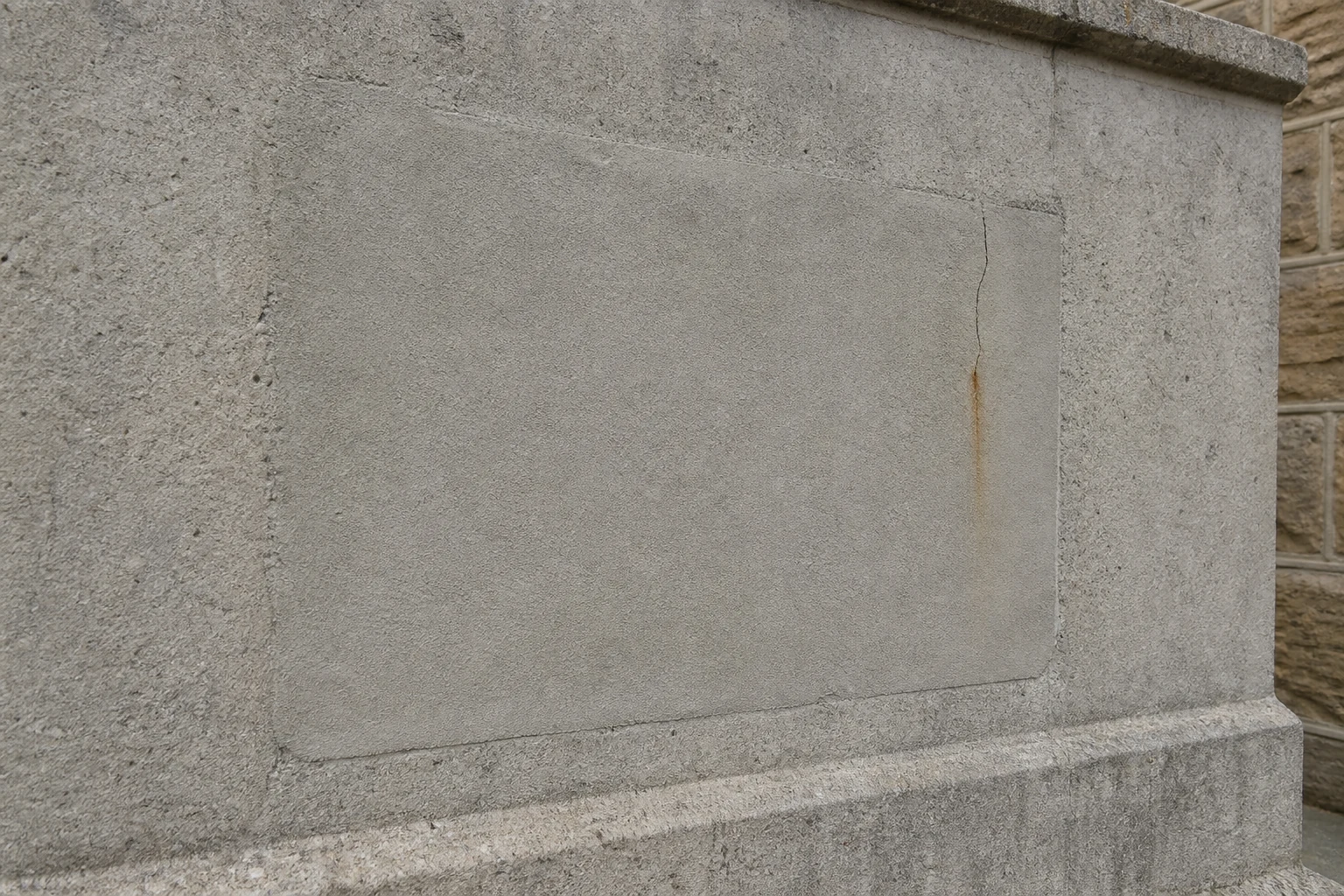
Traditional concrete repair often involves removing loose or defective concrete, cleaning or treating exposed steel and reinstating the concrete profile with a suitable repair mortar. This can be entirely appropriate where damage is localised and the cause has been addressed.
However, patch repair is not always a complete answer. If the surrounding concrete remains contaminated, carbonated or exposed to recurring moisture, corrosion can continue in adjacent areas. The repair may look neat at completion while the same conditions remain active around it.
This is where a more specialist approach becomes important. Effective concrete repairs should be based on diagnosis, not guesswork. Testing may consider concrete cover, carbonation depth, chloride levels, moisture pathways, cracking patterns and the likelihood of ongoing corrosion activity.
For building owners searching for concrete repair services or concrete repair contractors near me, the practical question is not simply who can fill a crack. It is who can identify whether corrosion is active, how widespread it is and what repair strategy will protect the structure after the visible defects are dealt with.
Where reinforcement corrosion is the main risk, cathodic protection for reinforced concrete can form part of a preventative repair strategy. Instead of treating only the damaged surface, it helps control the corrosion process itself.
How cathodic protection helps prevent further deterioration
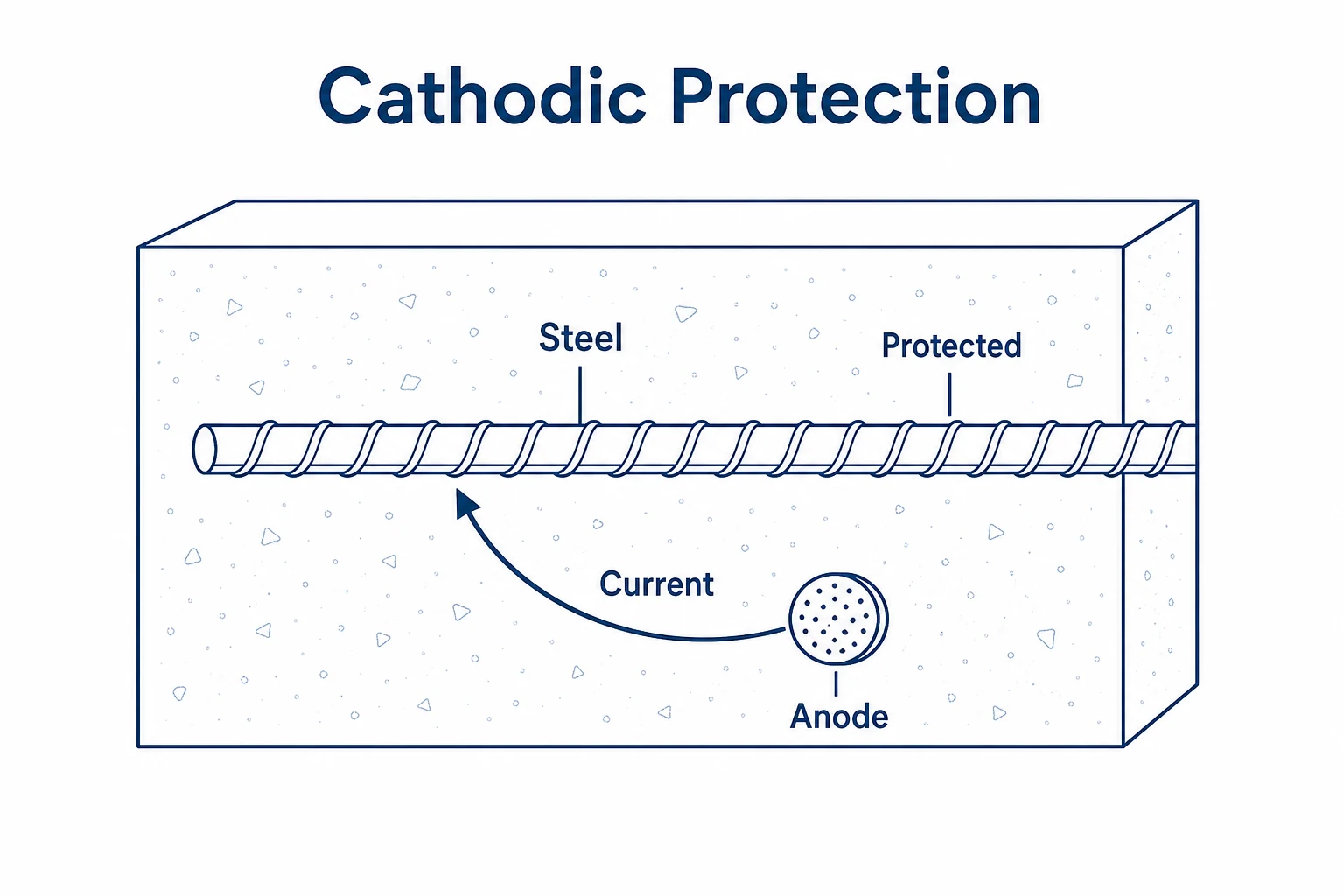
Cathodic protection is a specialist method used to reduce or stop corrosion of embedded steel. In simple terms, it changes the electrochemical behaviour of the steel so that corrosion is controlled. It is often considered where reinforced concrete is at continuing risk and where a conventional patch only approach may not provide enough protection.
There are different forms of cathodic protection, and the right system depends on the structure, exposure, condition and repair objectives. A specialist assessment is needed before any system is designed. The aim is to protect the reinforcement while working with the existing concrete repair plan.
Cathodic protection can be particularly valuable where contamination is widespread, where access for repeated repairs would be disruptive, or where the structure needs a more durable preventative solution. It does not remove the need for sound concrete repair practice. Damaged concrete still needs to be made safe and reinstated correctly. The difference is that the corrosion mechanism is also addressed.
Paramount Pointing explains the broader principle in its guide to preventing metal corrosion with cathodic protection. For reinforced concrete, that principle is applied carefully to protect embedded steel from further corrosion driven damage.
In many projects, the best outcome comes from combining investigation, concrete repairs, moisture management and cathodic protection where appropriate. That approach treats the structure as a system, rather than a collection of isolated cracks.
- Embedded steel is normally protected by the alkaline environment inside sound concrete.
- Carbonation, chlorides, moisture and oxygen can allow reinforcement corrosion to start.
- Rust expands around the steel, creating pressure that cracks and breaks surrounding concrete.
- Patch repairs can deal with visible damage, but they may not control the underlying corrosion risk.
- Cathodic protection is a specialist preventative solution that helps manage corrosion rather than simply covering the symptoms.
Frequently asked questions
What are the first signs of steel corrosion in concrete?
Common signs include rust staining, cracking along reinforcement lines, hollow sounding areas, loose concrete and exposed steel. Some damage can be hidden, so investigation is important where corrosion is suspected.
Can cracked concrete always be repaired with mortar?
Not always. Repair mortar can restore damaged areas, but the cause of cracking must be understood. If reinforcement corrosion is still active, further cracking may occur around or beyond the repaired section.
Is cathodic protection only used after concrete has failed?
No. Cathodic protection can be used as a preventative measure where embedded steel is at ongoing risk. It is designed to control corrosion activity and support a longer lasting repair strategy.
Who should assess corrosion in reinforced concrete?
A specialist contractor should assess the structure, the exposure conditions and the likely cause of deterioration. The repair approach should be based on evidence, not just the visible surface condition.
Speak to a specialist
If you are dealing with cracked, stained or spalling reinforced concrete, Paramount Pointing can help assess the cause and advise on the right repair approach, including cathodic protection where it is suitable.