White marks, dark runs and stubborn surface staining can make sound brick or stonework look tired, neglected or more damaged than it really is.
Chemical cleaning can be the right answer in some cases, but only when the stain, the masonry and the surrounding building fabric have been properly assessed first.
What chemical cleaning actually does
Chemical cleaning is a controlled method of treating stains that do not respond well to water rinsing, gentle washing or other low impact cleaning methods. It is not simply a stronger version of facade washing. The aim is to use the right product, at the right strength, for the right contact time, so the staining is reduced without harming the brick, stone, mortar or nearby materials.
On masonry, staining can come from several different sources. Some marks sit on the surface, while others are drawn out from within the wall by moisture movement. That distinction matters because a surface deposit and a moisture related salt problem need different thinking.
Specialists will usually look at the type of masonry, the condition of the face, the mortar joints, the likely stain source and the building’s exposure before recommending any treatment. Where chemical cleaning is suitable, it should be treated as a precise process rather than a blanket application across every wall.
Paramount Pointing explains this service in more detail on its specialist chemical cleaning for masonry page.
When staining may justify a chemical clean
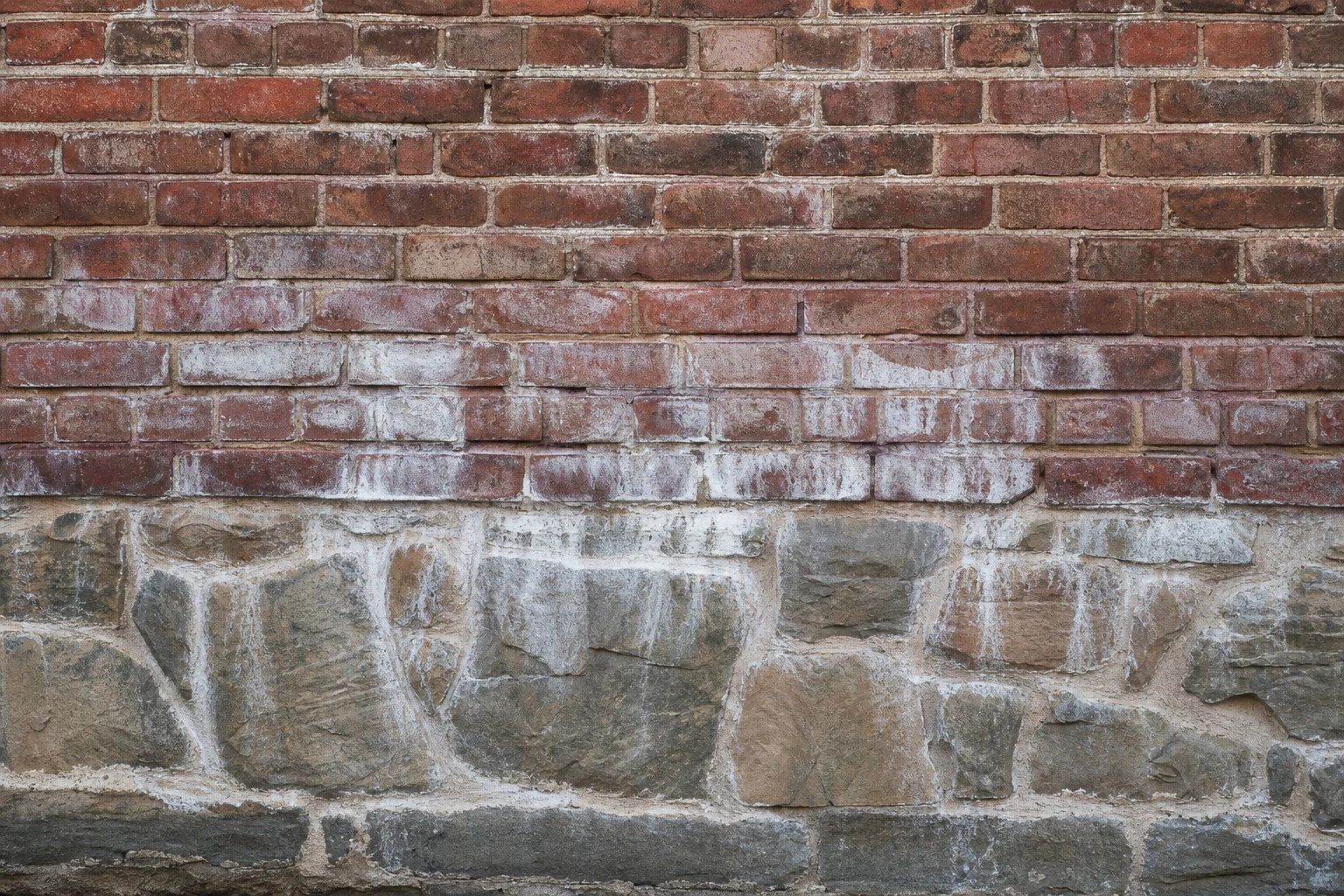
Chemical cleaning is most often considered when staining is bonded to the surface or when the deposit cannot be removed evenly by gentler methods. Common examples include certain mineral deposits, atmospheric staining, some forms of algae residue, old paint shadows, rust marks and persistent white marks on brickwork.
White marks are a common reason people start researching cleaning historic buildings or removing efflorescence from brick. Efflorescence is linked to salts moving through masonry and crystallising as moisture evaporates. In some cases, the visible salt can be brushed away or washed with care. In other cases, repeated staining points to an underlying moisture route that needs to be understood before cleaning is chosen.
That is why an assessment should ask a simple question first: is the staining only a surface issue, or is the wall still being fed by moisture? If the cause is active, cleaning may improve the appearance for a while, but the marks can return. If the source has been addressed and the masonry is suitable, controlled chemical cleaning can be part of a good restoration plan.
For a deeper explanation of salt deposits, see Paramount Pointing’s guide to efflorescence and white stains on brickwork.
Why assessment matters before any product touches the wall
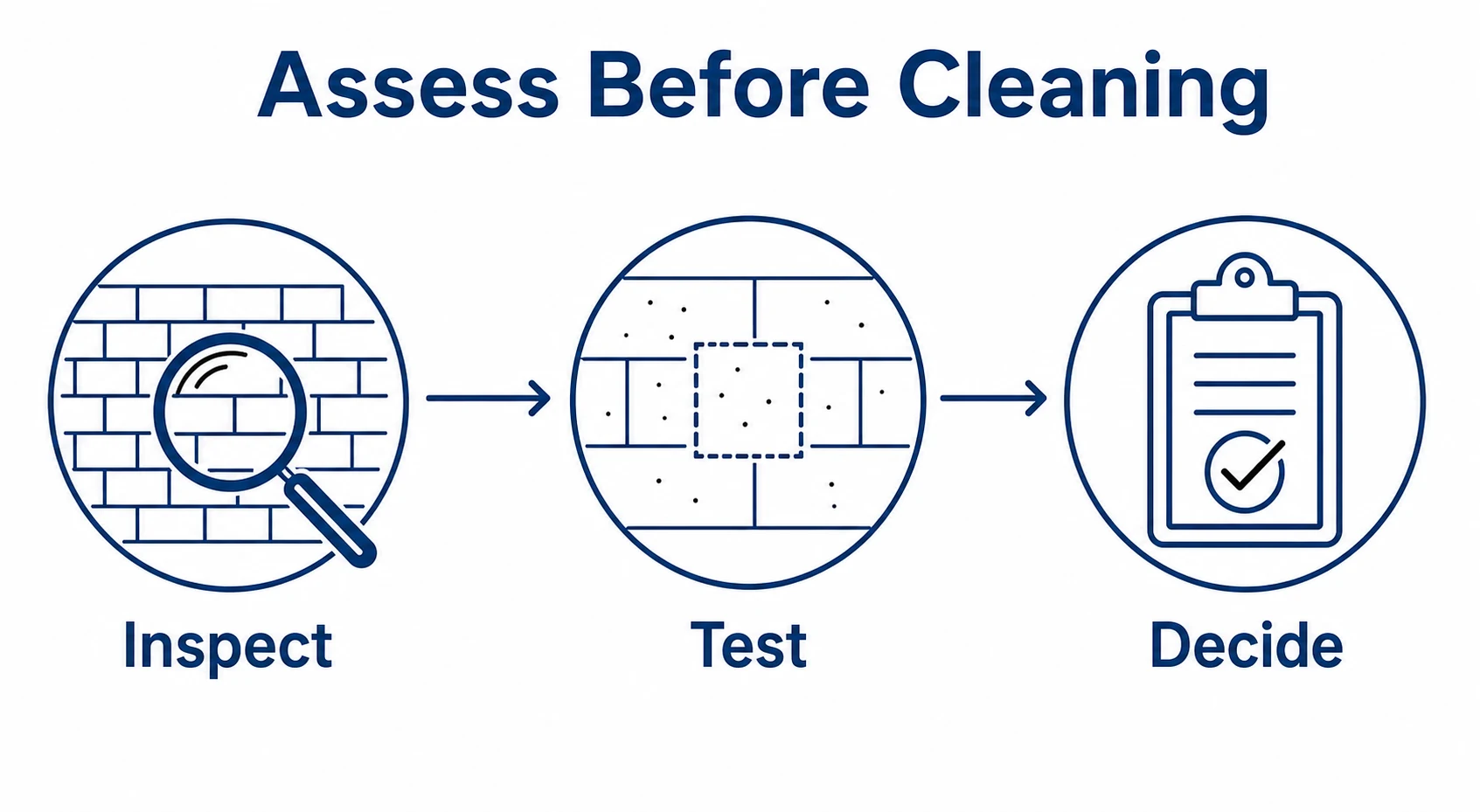
Brick and stone are not all the same. Fired clay brick, soft handmade brick, dense engineering brick, limestone, sandstone and mixed historic masonry can all react differently to cleaning products. Mortar also plays a major role. A wall with open joints, loose pointing or soft lime mortar may need repair before cleaning is sensible.
A proper assessment should check whether the surface is sound enough to clean, whether previous repairs have introduced incompatible materials and whether the wall contains vulnerable details. These might include decorative stone, metalwork, glazed units, timber, painted surfaces, air bricks or planting close to the work area.
Test patches are an important part of the decision. A small controlled area allows the contractor and client to see how the stain responds, whether the finish is even and whether the masonry keeps its natural character. Good cleaning should reduce unwanted staining while avoiding an over cleaned look.
If the mortar itself is failing, cleaning alone is not the priority. Open joints allow more water into the wall, which can worsen staining and damp related problems. In that situation, it may be better to consider the condition of the joints alongside cleaning. Paramount Pointing’s article on why mortar erodes from brickwork gives useful background on that issue.
How specialists keep chemical cleaning controlled
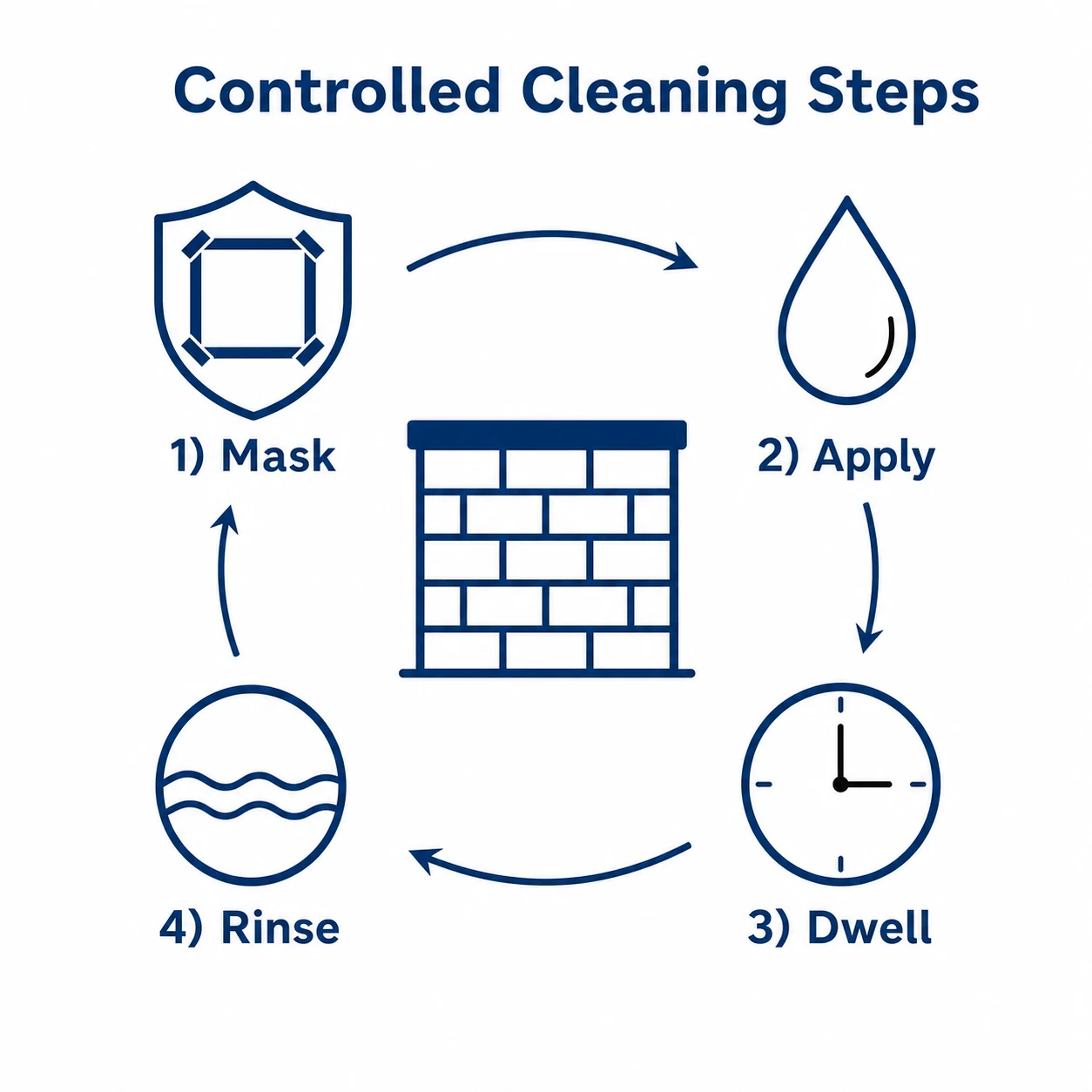
Safe chemical cleaning depends on control. The product should be selected for the stain and the masonry, then applied in a measured way. That usually means preparing the area, protecting adjacent materials, pre wetting where appropriate, keeping contact times under control and thoroughly rinsing the surface afterwards.
The word chemical can sound worrying, but the risk is not the existence of a cleaning agent. The risk is poor diagnosis, unsuitable product choice or careless application. A specialist approach reduces that risk by matching the method to the wall rather than forcing one treatment onto every surface.
Control also includes deciding where not to clean. If a wall has friable brick faces, delicate stone, crumbling mortar or staining caused by ongoing water ingress, the right recommendation may be to repair, dry out or investigate further before cleaning. That is not a negative outcome. It is the difference between appearance work and responsible masonry care.
Where the staining is appropriate for treatment, chemical cleaning can be very effective as part of a wider facade care plan. It can help restore clarity to brick or stone, reduce uneven deposits and prepare surfaces for further conservation work where needed.
Chemical cleaning is not the same as general facade cleaning
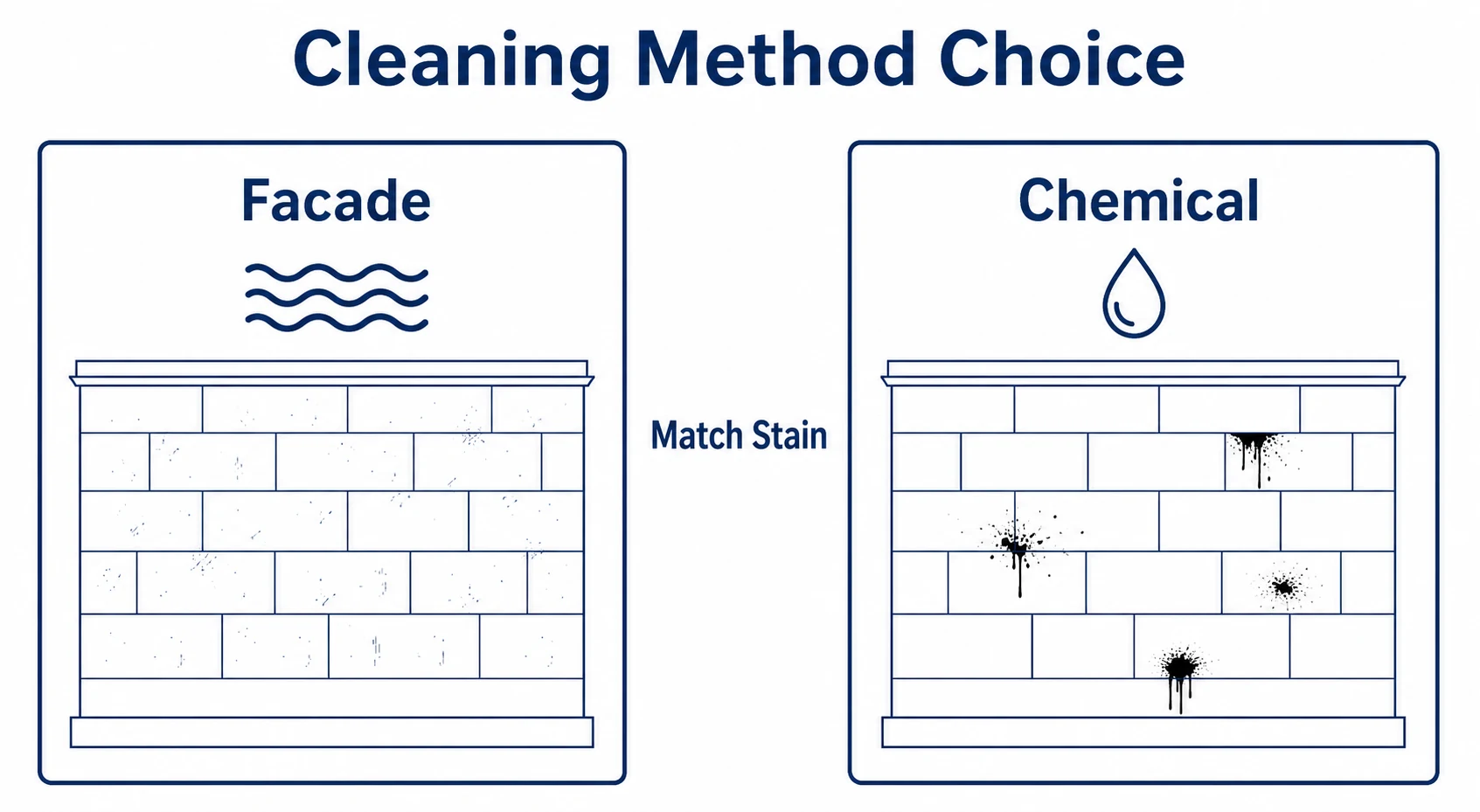
Many stained buildings need cleaning, but not all need chemical cleaning. General facade cleaning may involve low pressure washing, steam, careful agitation or other gentle methods. Chemical cleaning is more targeted and is used when the nature of the stain calls for a specific reaction or treatment.
This distinction matters for buyers because it helps avoid over treatment. If dirt, algae or loose deposits can be removed safely with a gentler method, that may be the best route. If staining is more stubborn, bonded or mineral based, a chemical method may provide a cleaner and more even result when used properly.
For older or more sensitive masonry, it is often wise to think in terms of minimum effective intervention. The goal is not to make every surface look new. The goal is to remove harmful or unsightly staining while preserving the character and surface texture of the masonry.
Paramount Pointing also covers wider cleaning approaches in its guide to gentle facade cleaning for historic brick and stone.
What to ask before approving chemical cleaning
If you are considering chemical cleaning, the best questions are practical ones. Ask what the likely stain source is, how the masonry condition has been assessed and whether a test area is recommended. Ask what will be protected during the work and how the surface will be rinsed or neutralised afterwards.
It is also worth asking whether any repairs should happen first. Cleaning a wall with defective pointing, cracked masonry or active damp may leave the root problem unresolved. A clear answer should explain the sequence of work, not just the cleaning method.
A good specialist will be comfortable explaining why chemical cleaning is suitable, or why another approach is better. That is the sign of a service led by building care rather than a one size fits all cleaning routine.
Used in the right circumstances, chemical cleaning is a useful masonry restoration tool. It can deal with stains that gentler methods struggle to shift, while still respecting the fabric of the building.
- Chemical cleaning is best used for specific masonry stains after proper assessment, not as a blanket cleaning method.
- White marks on brickwork may be efflorescence, so the moisture source should be considered before cleaning.
- Test patches help confirm the right product, contact time and finish before wider treatment.
- Loose mortar, soft masonry or active damp may need attention before cleaning is carried out.
- The aim is controlled stain reduction while protecting the character of the brick or stone.
Frequently asked questions
Is chemical cleaning safe for old brick or stone?
It can be safe when the masonry is suitable and the method is properly controlled. Older brick and stone should always be assessed first, with attention given to surface condition, mortar, previous repairs and vulnerable surrounding materials.
Will chemical cleaning remove efflorescence permanently?
Cleaning can remove visible salt deposits, but efflorescence may return if moisture is still moving through the wall. The cause of the moisture should be understood before deciding whether cleaning alone is enough.
Do all stained walls need chemical cleaning?
No. Some staining can be treated with gentler cleaning methods. Chemical cleaning is most useful when the stain is bonded, mineral based or resistant to low impact cleaning, and when the masonry can safely tolerate the treatment.
Should pointing be repaired before chemical cleaning?
If mortar joints are open, loose or badly eroded, repair may be needed before cleaning. Sound pointing helps limit water entry and supports a better restoration result.
Need a careful view on stained masonry?
Paramount Pointing can assess the staining, the surface condition and the safest cleaning route before any treatment is recommended.