Historic masonry rarely needs aggressive treatment. Most of the time, it needs a careful clean that respects the surface, the mortar and the way the building was designed to breathe.
From soot-darkened brick to algae on render or staining on carved stone, gentle facade cleaning can refresh a building without stripping away the character that makes it worth protecting.
Why historic surfaces need a lighter touch
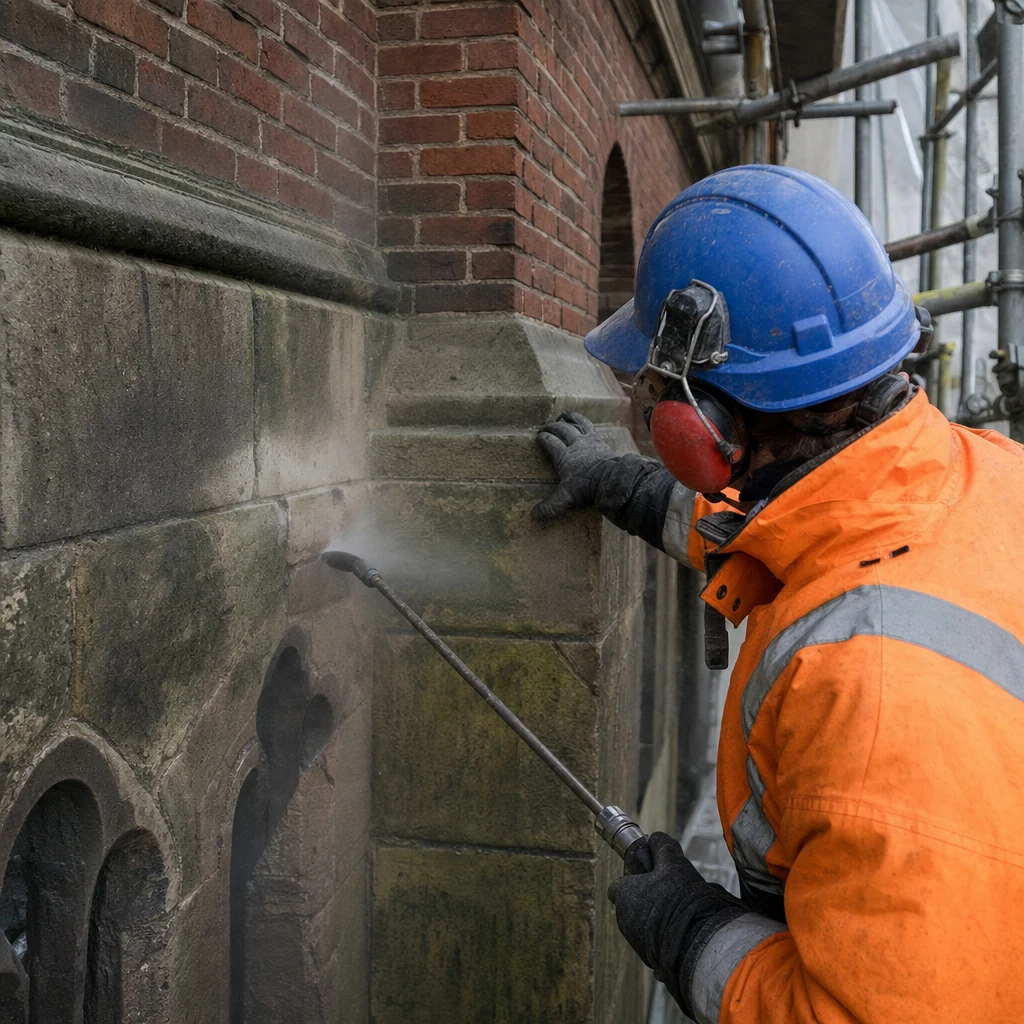
Older brick, stone and render can be more vulnerable than they first appear. A wall may look solid from the ground, but close inspection often reveals soft mortar joints, weathered arrises, old repairs, salt deposits, open cracks or previous coatings.
Harsh cleaning can remove more than dirt. On brick, it may damage the fired face and leave the surface more absorbent. On stone, it can erode detail, open the grain or create patchy colour. On render, it can disturb the finish or drive water into defects.
This is why cleaning historic buildings should begin with assessment, not equipment. The aim is to remove unwanted soiling while preserving the sound original material beneath it.
What gentle facade cleaning means in practice

Gentle facade cleaning is not simply using less power. It is the controlled use of the right method, water volume, temperature, pressure, distance and dwell time for the surface in front of the operative.
On site, this often means scaffolded access, close visual checks and small test areas before wider cleaning begins. Operatives may use long lances, low-pressure superheated water, controlled rinsing, hand tools or carefully selected cleaning agents. Mist around the masonry is common, but the process should remain measured and targeted.
Good practice also includes protection for windows, metalwork, planting, paths and neighbouring finishes. Staff should be properly equipped with construction PPE, including hi-vis clothing, helmets, gloves and hearing protection where needed.
Choosing the right method for brick, stone and render
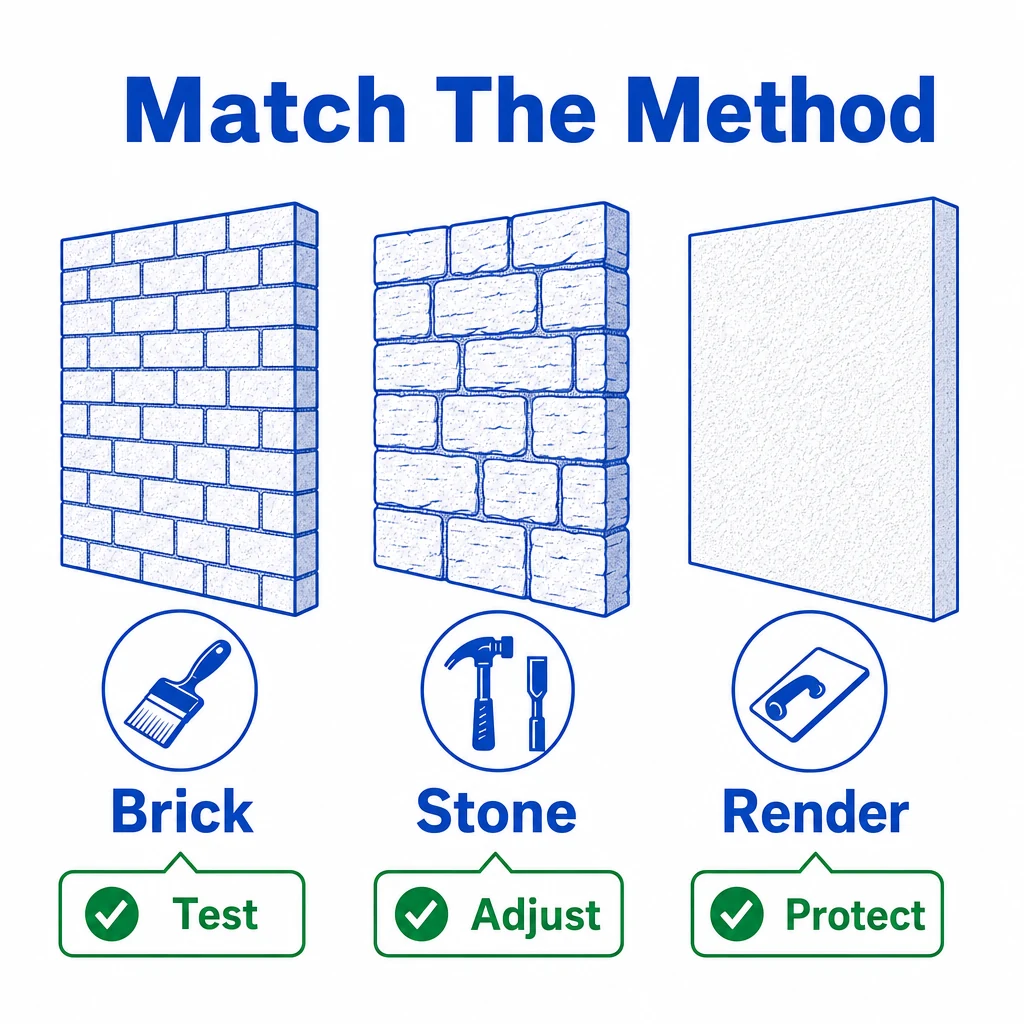
No single cleaning method is right for every facade. The safest option depends on the material, the staining and the condition of the wall.
- Brick: Often affected by carbon staining, algae, paint residue and salts. Cleaning must protect the fired face and avoid scouring soft handmade or weathered bricks.
- Stone: Can vary from dense and durable to soft and friable. Carved details, natural bedding planes and previous repairs all influence the approach.
- Render: Needs careful handling because texture, coating type and underlying cracks can all affect how water and cleaning agents behave.
For many projects, low-pressure hot water or steam-based cleaning is a suitable starting point. Where staining is more complex, controlled chemical cleaning may be considered after testing. The key is compatibility: any treatment should be matched to the substrate, then reviewed after a sample area has dried.
You can learn more about specialist facade cleaning for brick, stone and render and how different surfaces are assessed before work begins.
Why cleaning and repair should be considered together

Cleaning can reveal issues that were hidden by staining. Open joints, cracked bricks, loose render, corroding fixings or damp patches may become easier to see once dirt and biological growth are removed.
That does not mean cleaning has caused the problem. It often means the facade can now be understood properly. Where masonry is already fragile, repair may be planned before, during or after cleaning, depending on the condition and access.
For example, failed pointing can allow water into a wall, while inappropriate hard mortar can trap moisture and accelerate decay. In these cases, sympathetic brickwork repairs and repointing can support the long-term performance of the facade.
If metal reinforcement or embedded components are contributing to staining or cracking, cathodic protection may also be relevant as part of a wider conservation-led repair strategy.
What to expect from a careful site process
A considered cleaning project usually follows a clear sequence. The facade is inspected, risks are identified and suitable sample areas are agreed. These samples help confirm how the surface responds and what level of cleaning looks natural rather than over-cleaned.
During the work, operatives control run-off, protect adjacent materials and adapt their method as the wall condition changes. Weather also matters. A surface that is saturated, frozen, overheated or drying too quickly may need a different approach.
The best results are not always the brightest. Historic facades often look most authentic when staining is reduced, details are revealed and the surface remains recognisably aged. The aim is a clean, sound and breathable building envelope, not a stripped-back finish.
For further practical guidance on masonry care, restoration methods and maintenance planning, the restoration blog is a useful place to continue reading.
- Historic brick, stone and render should be cleaned with low-abrasion, surface-appropriate methods.
- Testing small areas first helps confirm the safest and most natural-looking result.
- Aggressive cleaning can damage fired brick faces, stone detail, mortar joints and render finishes.
- Cleaning often works best when considered alongside repointing, repair and moisture management.
Frequently asked questions
Is gentle facade cleaning suitable for all historic buildings?
It can be suitable for many historic facades, but the method must be chosen after inspection. Soft stone, delicate render, failed mortar or previous coatings may all affect the cleaning approach.
Will facade cleaning remove every stain?
Not always. Some staining is deep within the material or linked to salts, corrosion or moisture movement. The goal is safe improvement without damaging the original surface.
Why is a test patch important?
A test patch shows how the surface reacts once cleaned and dried. It helps set expectations, refine the method and avoid an overly bright or patchy finish.
Planning a facade cleaning project?
Paramount Pointing can help assess historic brick, stone and render with a careful, conservation-minded approach.