When people talk about brickwork, the focus is usually on the bricks themselves – colour, bond pattern, maybe the age of the building. The stuff in between often gets forgotten, even though it’s doing a lot of the hard work.
That “stuff” is the mortar, and the type you use can make a huge difference to how your property looks, performs and ages. A lot of homeowners assume modern cement mortar is always the best option because it sounds strong and long-lasting. In reality, for many older properties, natural lime mortar is a far better match.
At Paramount Pointing & Restoration, we work with both lime and cement mortars every day right across Manchester and the surrounding areas. Here’s a straightforward look at how they differ and when each one should be used.
What does mortar actually do?
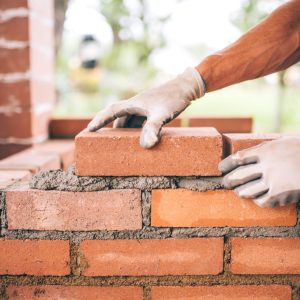 Mortar isn’t just glue for bricks. It has a few very important jobs:
- It bonds bricks or stone blocks together.
- It seals the joints, keeping out rain and draughts.
- It helps the wall cope with tiny movements caused by temperature changes, traffic vibrations and minor settlement.
In traditional construction, the mortar is meant to be the “sacrificial” part of the wall. It weathers and wears out first, because it’s easier and cheaper to rake out and replace mortar than it is to replace damaged bricks or stone.
That’s why choosing the right type of mortar really matters.
What is lime mortar?
Lime mortar has been used on buildings for hundreds of years. It’s usually made from:
- Lime
- Sand
- Water
That’s it – no Portland cement.
Because of its make-up, lime mortar behaves quite differently from cement:
- It’s breathable. Moisture can move through it and evaporate.
- It’s more flexible. It can cope with small movements without cracking.
- It’s softer than many historic bricks and stones, which is exactly what you want in older buildings.
If you live in a Victorian terrace, an old stone cottage or a heritage property, there’s a good chance it was originally built with lime mortar. Matching that with new lime when you repoint keeps the wall working as it was designed to.
What is cement mortar?
Cement mortar is the more modern option. It’s typically made from:
- Portland cement
- Sand
- Water
- Sometimes plasticisers or other additives
Once it’s set, cement mortar is very hard, dense and strong. It’s widely used on new builds made with engineering bricks, concrete blocks and cavity wall construction.
There are clear advantages:
- It sets relatively quickly, which suits fast-paced building sites.
- It’s strong enough for a lot of modern structural work.
- It can be easier to source and mix for general builders.
The problem comes when cement mortar is used on the wrong type of building.
Lime vs cement: the key differences
Here are the big contrasts a homeowner needs to understand.
Breathability and damp
Older solid-wall properties rely on being able to “breathe”. Moisture that gets into the wall needs to find its way back out again. Lime mortar allows that to happen.
Cement mortar is far less breathable. On an old wall it can trap moisture, pushing damp sideways or into the brick faces. That’s when you start seeing blown plaster, tide marks, salts and peeling paint indoors.
Flexibility and movement
All buildings move a little – especially near busy roads or on sloping ground. Lime mortar can take up small amounts of movement without causing too much damage.
Cement is rigid. When the structure moves, something has to give. Often it’s the brick or stone, not the mortar.
Strength vs compatibility
“Stronger” doesn’t automatically mean “better”. On a period property with soft handmade bricks or sandstone, cement mortar is usually too hard. Instead of the mortar eroding over time, the brick faces start to spall and crumble.
Lime is deliberately weaker than the masonry. The mortar takes the punishment, and when it reaches the end of its life, you repoint. The bricks or stone stay intact.
Appearance and ageing
Lime mortar weathers in a gentle, natural way and can be colour-matched to existing work, which is important on visible façades.
Cement joints can look harsh on older buildings, especially if the colour or joint profile is wrong. You’ve probably seen lovely old brickwork “ruined” by dark, proud cement joints that bear no resemblance to the original work.
When is lime mortar the better choice?
In our experience, lime mortar is often the right choice for:
- Victorian and older properties
- Solid brick or stone walls with no cavity
- Buildings made with softer bricks, sandstone or limestone
- Heritage and listed structures
- Properties with a history of damp or moisture issues
If your home falls into one of these categories, using cement mortar can store up problems for later. We often get called out to remove hard cement pointing that’s damaged the original brickwork, then repoint the whole elevation in lime.
The difference isn’t just technical – the building looks more “right” again once it’s been repointed in a suitable lime mix.
When does cement mortar still make sense?
Cement mortar isn’t the villain of the story; it just has a different role.
It’s usually appropriate for:
- Modern houses built with dense bricks or concrete blocks
- New boundary walls, garages and extensions built entirely in cement mortar
- Certain structural elements where an engineer has specified a particular mix
Even then, the mix has to be chosen carefully. Overly strong cement mortars can cause cracking and aesthetic problems on newer properties too. As with most things in construction, balance is important.
How Paramount choose the right mortar
Every property is different, so we never take a one-size-fits-all approach.
A typical job for us starts with:
- A site visit and visual survey
- Looking at the age and construction of the building
- Checking what type of mortar is already there
- Assessing any damp, movement or previous repair work
From there we’ll recommend a suitable mortar – often a lime-based mix on older properties, and the correct strength cement mortar where it’s appropriate.
We can also create small sample areas so you can see how the new joints will look before committing to a full elevation. Our team then handle the raking out, preparation and repointing with care, using joint profiles and finishes that suit the building.
Get in touch to arrange a survey or request a quote, and we’ll help you choose the right mortar – lime, cement or a combination – so your brickwork looks good, performs properly and lasts for years to come.